Monday, February 6, 2012

#82 Harriet Tubman: Union Scout


Woodcut printed in Sarah Bradford's The Scenes and Life of Harriet Tubman. This image is in the public domain.

Harriet Tubman, one of the most iconic black Americans in the history of country, is best known for her efforts as a "conductor" on the underground railroad, sneaking runaway slaves to the North and freedom. What isn't as well known about Tubman, however, is that during the Civil War she also led a raid near the Combahee River in South Carolina.

Under orders from Union commander Colonel James Mongomery, Tubman scouted the area and then on June 1, 1863, led several gunboats along the river banks. While soldiers burned the plantations, tore up railroad tracks, and laid torpedoes (mines) upriver, Tubman encouraged more than 800 slaves to come aboard the gunboats, which would take them to freedom.

Tubman's account, as told to Sarah Bradford, author of The Scenes and Life of Harriet Tubman, are recounted as follows:

"I nebber see such a sight," said Harriet; "we laughed, an' laughed, an' laughed. Here you'd see a woman wid a pail on her head, rice a smokin' in it jus' as she'd taken it from de fire, young one hangin' on behind, one han' roun' her forehead to hold on, 'tother han' diggin' into de rice-pot, eatin' wid all its might; hold of her dress two or three more; down her back a bag wid a pig in it. One woman brought two pigs, a white one an' a black one; we took 'em all on board; named de white pig Beauregard, and de black pig Jeff Davis. Sometimes de women would come wid twins hangin' roun' der necks; 'pears like I nebber see so many twins in my life; bags on der shoulders, baskets on der heads, and young ones taggin' behin', all loaded; pigs squealin', chickens screamin', young ones squallin'."

Many were too scared to get on board, so, according to Bradford, Tubman began to sing:

Of all the whole creation in the East or in the West,
The glorious Yankee nation is the greatest and the best.
Come along! Come along! don't be alarmed,
Uncle Sam is rich enough to give you all a farm.

The slaves boarded the gunboats, which transported them to the relative safety of Beaufort, South Carolina.

Sources:

LeSourd, Nancy. "Harriet Tubman: Civil War Spy, Daring Soldier." Accessed at http://libertyletters.com/resources/civil-war/harriet-tubman-civil-war-spy.php, on January 6, 2012.

Bradford, Sarah. The Scenes and Life of Harriet Tubman. W.J. Moses Printer. Located at http://www.archive.org/stream/scenesinlifeofha00bradrich#page/n7/mode/2up. Accessed on January 6, 2012.

Wednesday, January 18, 2012

#81 From the Eyes of a 10-Year-Old Girl

Carrie Berry. Photo in the public domain and found at
http://americancivilwar.com/women/carrie_berry.html


Atlanta resident Carrie Berry turned 10 on August 3, 1864, as Union forces under the command of General William Tecumseh Sherman shelled the city. She celebrated by doing some ironing and sewing some mittens for herself. Even as she describes the shells passing through parts of her house and garden, it's evident that she doesn't yet understand their destructive power. Here is what she says:

Aug. 14. Sun. Sure enough we had shells in abundance last night. We averaged one every moment during the night. We expected every one would come through and hurt some of us but to our joy nothing on the lot was hurt. They have ben throwing them at us all day to day but they have not ben dangerous. Papa has ben at work all day making the cellar safe. Now we feel like we could stay at home in safety. I dislike to stay in the cellar so close but our soldiers have to stay in ditches.


Aug. 15. Mon. We had no shells this morning when we got up and we thought that we would not have any to day (but, my, when will they stop) but soon after breakfast Zuie and I were standing on the platform between the house and the dining room. It made a very large hole in the garden and threw the dirt all over the yard. I never was so frightened in my life. Zuie was as pale as a corpse and I expect I was too. It did not take us long to fly to the cellar. We stayed out till night though we had them all day but they did not come so near us again.


Aug. 16. Tues. We had shells all night. There was a large piece came through Mama's room directly after we went to bed and fell on the little bed and I expect if we had been sleeping there some of us would have ben hurt. Cousin Henry and Cousin Eddy came to see us to day. They told us that they did not think the Federals would be here much longer to torment us and I hope that it may be so for we are getting very tired of living so.


Sherman's siege of Atlanta lasted until September 2, 1864, concluding his infamous march to the sea.


Sources: 


A Confederate Girl: The Diary of Carrie Barry, 1864. Edited by Christy Steele and Anne Todd.


http://gacivilwar.org/Stories/Detail/Carrie-Berry. Website Accessed 1/18/2012

Thursday, January 12, 2012

#80 Gambling and Cards


Officers of the 114th Pennsylvania Infantry playing cards in front of tents near Petersburg, Va. Courtesy Library of Congress
 To assuage the boredom that came between marching, drilling, and battles, soldiers on both sides of the Mason-Dixon line engaged in various pastimes ranging from cards to cricket. Popular card games included of course poker and 21, but such games as euchre and keno were also played. Besides cards, dominoes, chess, and checkers were portable, quiet games that the soldiers could play as well if they could get their hands on them. Those seeking more raucous forms of recreation wrestled, boxed, played leapfrog, or participated in horse racing or a game of cricket. In at least one instance, a regiment knocked down wooden pins with cannon balls.

Source: "Past Times of the 1860s," Civil War Trust. Located at http://www.civilwar.org/education/history/on-the-homefront/culture/pasttimes.html. Accessed 1/12/2012.

Wednesday, January 11, 2012

#79 Antietam


Antietam Battlefield. Photo by Alexander Gardner. Courtesy of the Library of Congress.
 September 17, 1862, was the bloodiest single day of the entire Civil War, or for that matter, any other American fought war since then. 23,100 casualties were inflicted, and of that number, 6,000 were dead. By comparison, 2,000 soldiers died on D-Day during World War II. The heaviest fighting ocurred in a cornfield belonging to David R. Miller, near Dunker's Church. Following the close-quarters, bloody battle, Union General Joseph Hooker stated, "In the time I am writing, every stalk of corn in the northern and greater part of the field was cut as closely as could have been done with a knife, and the slain lay in rows precisely as they had stood in their ranks a few moments before."

Antietam is also known for a sunken road at the center of the battlefield, where confederates struggled to hold and then tried to retreat up a slope, only to be shot down by Union soldiers and canon, their bodies falling back onto the road. Following the battle, the road was aptly renamed "Bloody Lane."

Although the battle's outcome was officially "inconclusive," it was the Confederates who retreated back across the Potomac into Virginia. Nevertheless, Union General George McLellan's failure to use the entire army in a concerted effort rather than a conglomeration of single orders to individual units contributed to his dismissal by President Lincoln the following November. 

Sources:
"Battle of Antietam," Wikipedia. http://en.wikipedia.org/wiki/Battle_of_Antietam#Battle. Accessed 1/11/12.
"The Battle of Antietam," http://www.civilwar.org/. Accessed 1/11/12.
"Antietam," CWSAC Battle Summaries. American Battlefield Protection Program. http://www.nps.gov/hps/abpp/battles/md003.htm. Accessed 1/11/12.

Thursday, May 26, 2011

#78 What's in a Name?

Signatures from "Capture of a Rebel Brigade at Gettysburg July 1st 1863 by the 6th Wis, 95th N.Y. and 14th N.Y.S.M." Courtesy Library of Congress


According to the U.S. Census of 1880, these were the top 20 most popular male names during and after the Civil war (from 1861-1870.)

John
William
Charles
James
George
Frank
Henry
Thomas
Joseph
Edward
Robert
Frederic
Samuel
Albert
Lewis
David
Harry
Daniel
Andrew
Walter

The top 20 most popular female names were:

Mary
Elizabeth
Sarah
Ann
Emily
Ellen
Catherine
Margaret
Jane
Martha
Ada
Frances
Susan
Alice
Nancy
Lou
Harriet
Julia
Lucy
Helen

Some of the least favorite male names included:

Emmett
Leander
Mitchell
Zacharias
Bruce
Berry
General
Luke
Lyman
Clyde
Ross
Max
Freeman
Millard
Ransom
Erwin
Uriah
Price
Orlando
Lemuel

And the least favorite female names:

Inez
Lida
Almeda
Casandra
Olga
Theodoci
Clementi
Alberta
Ora
Mabel
Sabina
Lulu
Tilda
Myra
Tennessee
Lidia
Vina
Celina
Marci
Easter

Source: "Given Name Frequency Project," http://www.galbithink.org/names/agnames.htm. Accessed May 26, 2011.

Friday, May 20, 2011

#77 Crazy Betsy

Elizabeth Van Lew, or "Crazy Betsy"


Elizabeth Van Lew hated slavery, which, for a woman living in Richmond when the Civil War broke out, was odd in and of itself. But she was also outspoken, and dressed strangely, which earned her the name of "Crazy Betsy," or "Crazy Bet." Nevertheless, her neighbors had no idea how strange she actually was: she was a Union spy.

Born, raised, and schooled in Philadelphia, Lizzie, as her family knew her, lived with her mother in Richmond following her father's death. When the war broke out, she was in her 40s, and was a staunch Unionist.

The most remarkable thing about Van Lew is that she was pro-Union out in the open. On days of fasting and prayer proclaimed by the Confederate government, Van Lew held elaborate meals and openly voiced her opinions against slavery.

In retrospect, it seems that her eccentricities helped advance her plight to help the Union and its soldiers. Everyone saw her as harmless, and therefore let her do as she wished. As the war progressed, she refitted her home with secret passages, hidden rooms, and supposed tunnels that led to the James River. Many escapees are believed to have taken shelter there on their way northward.

She also gained access to the prisons to carry books and food to the imprisoned Union officers, who passed her information that had been overheard. Moreover, Van Lew organized a Union sympathizer group in Richmond, which included Elizabeth Bowser, an African-American woman who was on the whitehouse staff and overheard important conversations as she served meals and attended to Jefferson Davis.

In retrospect, it is truly remarkable how she was able to hide in plain sight, being dismissed as slightly crazy person, yet be among the most effective spies for the entire Civil War. General U.S. Grant stated that Van Lew had provided the most valuable information from Richmond during the war. He later appointed her postmistress of the city.

Sources:

"Civil War Podcast by Dr. James Robertson," produced by WVTF Public Radio. Accessed at  http://www.wvtf.org/news_and_notes/feeds/wvtf_cw_rss.php on May 20, 2011.

"Elizabeth Van Lew." Accessed at http://www.civilwarhome.com/vanlewbio.htm on May 20, 2011.

Thursday, May 5, 2011

#76 Carrying the Log and Other Punishments


"Too Fond of Whiskey." Source: Library of Congress
 The Civil War, like all wars, consisted of long stretches with nothing to do broken up by short periods of marching and fighting. During the slow times, Union soldiers in Virginia passed the time by stealing food from nearby southern farmers, getting drunk, gambling, fighting among themselves, or all of the above. The creativity of the offenses were often met with equally creative punishments.

1) Carrying the Log: For minor offenses, soldiers had to substitute his rifle for a thick log, that he had to carry with him wherever he went. Often, he would be called to guard the tent of the officer responsible for making him carry it.

2) Fit to be Tied: For moderate offenses, a soldier might have to sit with a stick placed behind his knees with his hands tied together in front of his ankles, and a bayonet in his teeth.

3) Barrel Balance: Also for moderate offenses, this punishment consists of removing the lid from a barrel and forcing the soldier to stand, and balance, on the rim. Soldiers were also made to wear the barrel, and only the barrel.

4) Branding and Flogging: For major offenses, such as attempted disertion, soldiers might have been branded, flogged, or hung up by their thumbs.

5) Death: The worst offenders were shot, sometimes sitting on their own coffins, or hanged.

Sources:
Gone for a Soldier: The Civil War Memoirs of Private Alfred Bellard

Monday, May 2, 2011

#75 Toppling the Stonewall

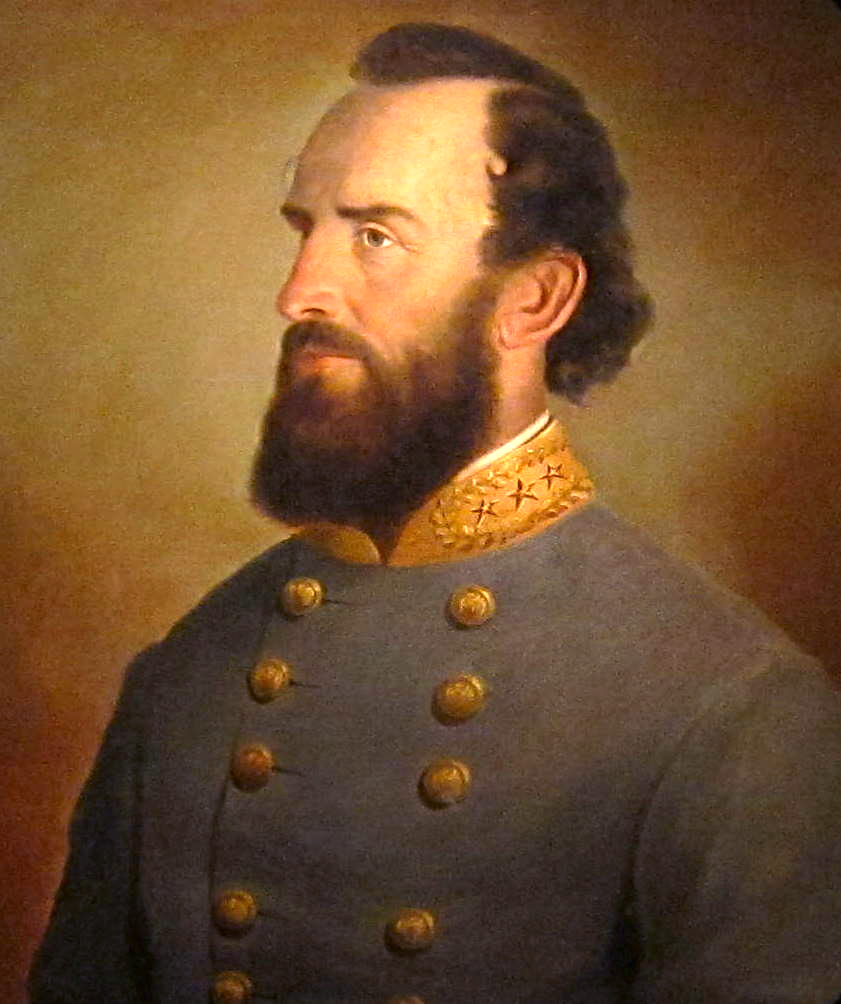
A portrait of Stonewall Jackson (1864, J. W. King)
located in the
National Portrait Gallery in Washington, D.C.

Before the death of the nefarious terrorist leader, Osama Bin Laden, May 2nd commemorated the mortal wounding of another rebel who fought against the United States: Johnathan "Stonewall" Jackson. While General Johnathan Jackson was certainly no terrorist, and is still considered many to be one of the greatest generals in amercian history, there is no doubt that his death played a pivotal part in the eventual victory of the Union over the Confederacy.

Jackson both distinguished himself and earned the nickname "Stonewall" at the First Battle of Bull Run. General Barnard Bee exclaimed that Jackson's brigade was standing like a stone wall, which, depending on the source, meant that it was either staying strong and not giving up any ground or was just standing there and not coming to help reinforce Bee. In any case, the name stuck, and the brigade, following Jacksons promotion to general, retained the name "Stonewall Brigade."

On May 2nd, 1863, following a successful campaign that routed the Union forces at Chancellorsville, Jackson was returning to his own lines when he was shot by his own men. A week later, on May 10th, he died of pneumonia that was considered a complication caused by the wound.

Source: http://www.civilwarhome.com/jackbio.htm

Wednesday, April 27, 2011

#74 Titanic of the Mississippi

At 2:00 a.m. on April 27, 1865, three boilers suddenly exploded on the paddleboat Sultana, which was carrying 2,400 passengers consising mostly of newly freed Union prisoners who had managed to survive the horrors of Andersonville. Approximately 1,800 people died in the accident, which is considered the worst maritime disaster in U.S. history.

It was believed that the cause was low water in the boilers combined with the fact that the ship was top heavy, causing hot spots to form as the boiler water swished back and forth causing steam pressure to build. However, in 1888, a man named William Streetor claimed that his business partner, Robert Louden, confessed on his deathbed that he had sabotaged the Sultana using a coal torpedo. Nevertheless, what actually occurred remains a mystery.


The Sultana

Thursday, October 7, 2010

#73 Making Due

As commodities became scarce in the South, men and women made due with what they had. Soap, for example, was produced from home out of water, lye, and grease. To produce lye, water was filtered through a tray of wood ash. When meat was scarce, china berry and cottonseed oil was used as a grease-substitute.

Toothbrushes and tooth powder were highly valued and in short supply. Such things as arrowroot, chalk, charcoal, cuttlefish bone, honey, myrrh, orris root, and salt and soda were used as tooth powder. Hog bristles, twigs, or the licorice roots were used as toothbrushes.

Rice flour was a substitute for face powder and melted lard mixed with rose petals was used as hair oil.

When paper was scarce, individuals made the most of what they had. They would write a full page and then turn the paper 90 degrees and fill the paper that way. It made the letter difficult to read but not impossible. Ink was made using dogwood extract or elderberries.

cross_writing024

(Source: Varhola, Michael J. Everyday Life During the Civil War: A Guide for Writers, Students, and Historians. Cincinnati: Writer's Digest Books. 1999.)

Tuesday, October 5, 2010

#72 The Ballad of Widow Fritchie

Barbara Fritchie, age 96,  of Frederick, Maryland, was immortalized in a poem for something she had nothing to do with. In September 1862 Lee's army was heading northward through the town. As they marched, so the story goes, they dragged a captured American flag through the dirt. Upon seeing this, Mrs. Fritchie, otherwise bedridden, hobbled out of her house and began to curse at the soldiers and their leader, Stonewall Jackson. According to the ballad by John Greenleaf Whittier this is what happened:

"Shoot, if you must, this old gray head
But spare your country's flag," she said."

A shade of sadness, a blush of shame,
Over the face of the leader came;

The nobler nature within him stirred
To life at that woman's deed and word;

"Who touches a hair of yon gray head
Dies like a dog! March on!" he said.

All day long through Frederick street
Sounded the tread of marching feet;

All day long that free flag tost
Over the heads of the rebel host.

The real Barbara Hauer Fritchie stayed in her bed during the entire Confederate occupation. Jackson had entered the city in an ambulance as the result of being thrown from a horse. When he left the city, Jackson had taken a different route than his troops, who passed the Fritchie home.

After the Confederates left and the Union soldiers entered the city, the sweet old woman got out of her bed and appeared in her doorway waving an American flag that had been stored between the pages of her family bible. Her niece thought the woman's patriotism would make a good article for the newspaper and passed it along. The story, however, evidently became mixed with a third-hand account mentioned by a doctor in Fredericksburg who heard from a clergyman that an unidentified old woman berated the Confederate troops for their mistreatment of the flag.

Like wildfire, the story-turned-legend raged through the Union ranks, adding details as it went until it reached the ears of the Whittier. For decades afterward, its origins and validity were studied and questioned.

Fritchie died in December, 1862, and never knew of the immortal fame she had earned.

(Source: Davis, Burke. The Civil War: Strange & Facinating Facts. New York: Wings Books. 1960.)

Monday, October 4, 2010

#71 "That Is What He Said..."

On May 14, 1942, the Cincinnati Orchestra played music that had never been heard before, but would become one of the most popular orchestral works of all time. Under the direction of the composer, Aaron Copland, the orchestra played "Lincoln Portrait" which included excerpts from speeches--including the Gettysburg Address--that were spoken by William Adams.

Copland was commissioned by Andre Kostelanetz to write the piece as part of a three-part presentation lauding some of the nation's most important individuals. Jerome Kern wrote a piece about Mark Twain and Virgil Thompson highlighted New York Mayor Fiorello La Guardia and journalist Dorothy Thompson. At first, Copland wanted to compose a piece about Walt Whitman, but Kostelanetz asked him to choose a statesman instead. That's when Copland chose Lincoln. I, for one, am glad he did.


Here's the text of the narrative to accompany the orchestration:

Fellow citizens, we cannot escape history."

That is what he said. That is what Abraham Lincoln said.

"Fellow citizens, we cannot escape history. We of this congress and this administration will be remembered in spite of ourselves. No personal significance or insignificance can spare one or another of us. The fiery trial through which we pass will light us down in honor or dishonor to the latest generation. We, even we here, hold the power and bear the responsibility." [Annual Message to Congress, December 1, 1862]

He was born in Kentucky, raised in Indiana, and lived in Illinois. And this is what he said. This is what Abe Lincoln said.

"The dogmas of the quiet past are inadequate to the stormy present. The occasion is piled high with difficulty and we must rise with the occasion. As our case is new, so we must think anew and act anew. We must disenthrall ourselves and then we will save our country." [Annual Message to Congress, December 1, 1862]

When standing erect he was six feet four inches tall, and this is what he said.

He said: "It is the eternal struggle between two principles, right and wrong, throughout the world. It is the same spirit that says 'you toil and work and earn bread, and I'll eat it.' No matter in what shape it comes, whether from the mouth of a king who seeks to bestride the people of his own nation, and live by the fruit of their labor, or from one race of men as an apology for enslaving another race, it is the same tyrannical principle." [Lincoln-Douglas debates, 15 October 1858]

Lincoln was a quiet man. Abe Lincoln was a quiet and a melancholy man. But when he spoke of democracy, this is what he said.

He said: "As I would not be a slave, so I would not be a master. This expresses my idea of democracy. Whatever differs from this, to the extent of the difference, is no democracy."

Abraham Lincoln, sixteenth president of these United States, is everlasting in the memory of his countrymen. For on the battleground at Gettysburg, this is what he said:

He said: "That from these honored dead we take increased devotion to that cause for which they gave the last full measure of devotion. That we here highly resolve that these dead shall not have died in vain. That this nation under God shall have a new birth of freedom and that government of the people, by the people, and for the people shall not perish from the earth."

(Sources: Pollack, Howard, Aaron Copland: The Life and Work of An Uncommon Man. New York: Henry Holt & Company. 1999. Child, Fred. "Copland's 'Lincoln Portrait.'" Transcription of National Public Radio broadcast. Aired November 10, 2004.)

Thursday, September 30, 2010

#70 Subversive Explosives

General Gabriel J. Rains, CSA

In January 1864 a small, black, iron object was placed on the desk of Jefferson Davis. The confederate president picked it up, turned it in his hands, and said, "Perfection itself." It was a bomb. The bomb was designed to be thrown into a stack of coal on a coal barge, which would be shoveled into a ship's boiler. The captured blockade-runner Greyhound was the first casualty of this secret weapon. It was designed by CSA General Gabriel J. Rains.

The coal-bomb was not the only weapon designed by Rains. Together with his brother, George Washington Rains, they created landmines composed of an iron cylinder with a conical top. On the top was a plank that, when pressed by marching soldiers or a horse, would activate the fuse and cause an explosion.

(Source: Davis, Burke. The Civil War: Strange & Fascinating Facts. New York: Wings Books. 1960.)

Wednesday, September 29, 2010

#69 Layman's Poetry


Here is some poetry by a Union soldier:

I bring thee no riches
No wealth from the sea
But the heart in my bosom
Sighs ever for thee.
[P.S.] How can a fellow help it.

Here is some by a Rebel:

The rose is red,
And the villets blue
And hant give me nary present
That is purty like you.

Another Rebel wrote:

Green is the vine,
And red is the Rose;
How I love you,
Nobody noes.

(Source: Wiley, Bell Irvin. The Bell Irvin Wiley Reader. Edited by Hill Jordan, James I. Robertson, Jr., and J.H. Segars. Louisiana State University Press. 2001.)

Tuesday, September 28, 2010

#68 Pregnancy by Minie Ball

In the American Medical Weekly dated November 7, 1874, a doctor relates an unusual story of a confederate war soldier during the battle of Raymond, Mississippi in 1863. During the battle, a minie ball crashed into the soldier's tibia, ricocheted through his scrotum and then subsequently penetrated the abdomen of a 17 year old girl who was occupying a nearby farmhouse with her mother and sister. After dressing the girl's wound, the doctor explained, he visited her over the next few months and realized that her abdomen continued to swell as if she were pregnant. Upon examination, he determined that she was still a virgin and that the bullet had impregnated her with the unfortunate soldier's sperm. What was more, the bullet was found in the baby boy's scrotum following his birth.

Though a fascinating, yet slightly disgusting, story, it was later discovered that a story was all it was. In the editor's note section of the November 21, 1874 issue of American Medical Weekly, it stated that the doctor, one L.G. Capers, "disclaims responsibility for the truth of that remarkable case of impregnation by a minie ball." It also described the article as "contemplated fun" and admonished the reader not "to cut capers" after reading it.

In addition, the popular television show Mythbusters on the Discovery Channel disproved the myth by putting it through a simulated test. They found that the ball could ricochet more than 100 yards, but the heat of the minie ball would have been sufficient to destroy the sperm if it had carried any in the first place.

(Sources: Capers, L.G., "Attention Gynecologists: Notes from The Diary of a Field and Hospital Surgeon," The American Medical Weekly, November 7, 1874. Editor's Note, The American Medical Weekly, November 21, 1874. March 30, 2005. Mythbusters, "Son of a Gun," Discovery Channel. Aired March 30 2005.)

Tuesday, September 21, 2010

#67 The Slavery Quilt Code: Fact or Fabric-ation?

When the book Hidden in Plain View: A Secret Story of Quilts and the Underground Railroad hit the shelves in 2000, it began a debate that still continues to this day. The book was based on an oral history passed down to Ozella McDaniel Williams, who said that specific symbols were sewn into quilts to help runaway slaves escape through the underground railroad. Without documented proof, however, some historians—specifically quilt historians—believe that quilt codes are a complete myth. Others believe that the quilt code theory is plausible, and that no documented proof exists because white men predominately wrote history, whereas women—especially illiterate black women— passed information through oral history. Regardless of whether it is true or not, the idea of hiding directions in a quilt hanging in the plain sight of an ignorant slave master makes for a compelling story.

(Source: Stukin, Stacie. “Unravelling the Myth of Quilts and the Underground Railroad,” Time. April 3, 2007. http://www.time.com/time/arts/article/0,8599,1606271,00.html.)

Thursday, September 16, 2010

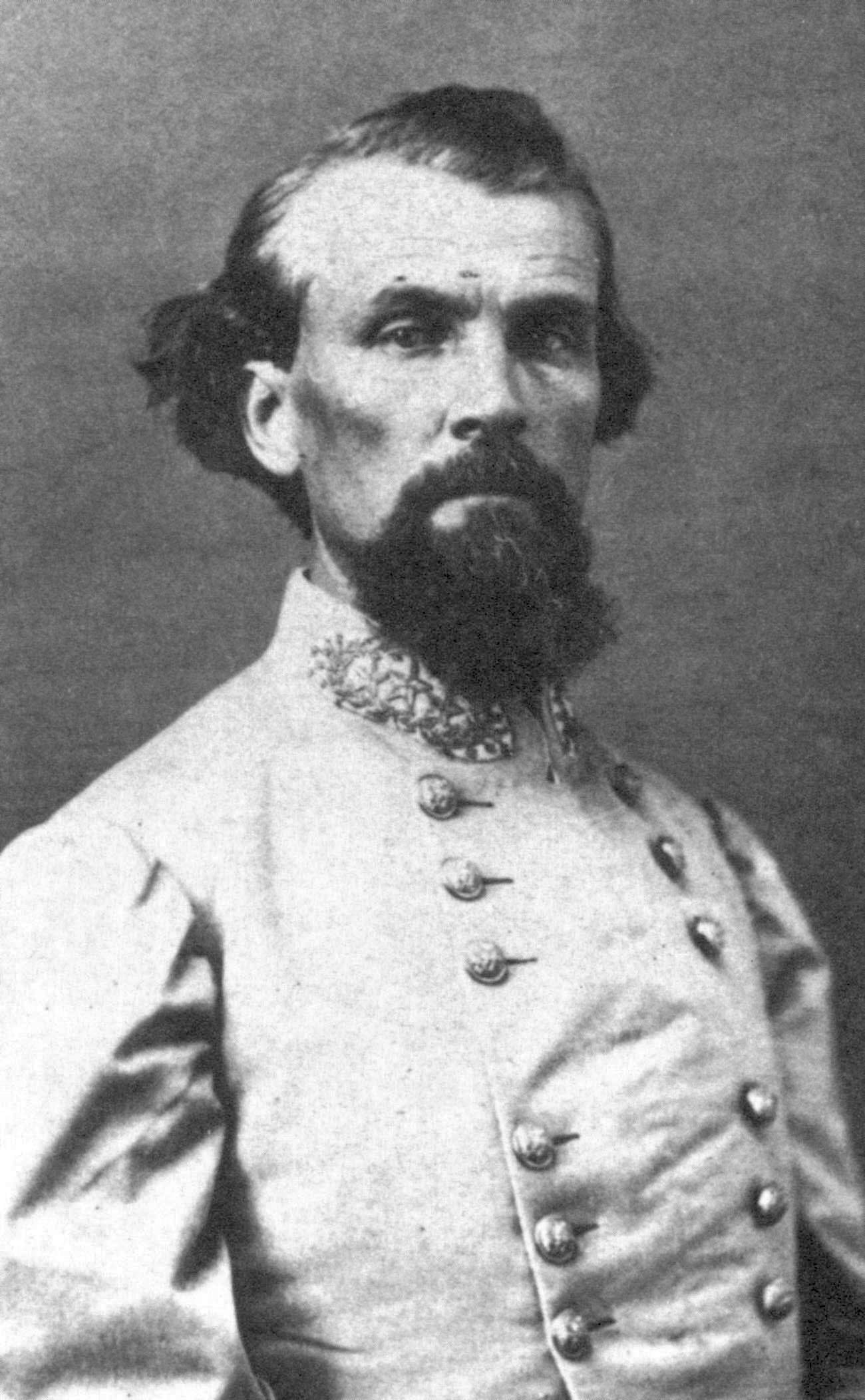
#66 Nathan Bedford Forrest: KKK Grand Wizard or Civil Rights Promoter?

During the war, Nathan Bedford Forrest was a brilliant calvaryman for the Confederate Army. Following the war, however, the facts about Forrest became obscured. Some historians say that he became the first grand wizard of the original Klu Klux Klan, organized in 1866. The purpose of the original klan, which was disbanded in 1869, was to convince former slaves that it was in their best intrests to return to their home states in a "near-slavery" condition. Forrest later denied his involvement with the klan, and even promoted rather progressive ideas. In 1875 he spoke at the Independent Order of Pole-Bearers Association, comprising black individuals who promoted freedom and equality in the South. During his speech, Forrest said, "I came to meet you as friends, and welcome you to the white people. I want you to come nearer to us. When I can serve you I will do so. We have but one flag, one country; let us stand together. We may differ in color, but not in sentiment.... Go to work, be industrious, live honestly and act truly, and when you are oppressed I'll come to your relief." Following his remarks, he kissed a young black girl on the cheek as a thank you for a bouquet of flowers, which was unheard of at the time.

(Source: http://www.tennessee-scv.org/ForrestHistSociety/forrest_speech.html; Wills, Brian C., "Nathan Bedford Forrest," in Tennesee Encyclopedia of History and Culture. http://tennesseeencyclopedia.net/imagegallery.php?EntryID=F035)

Monday, September 13, 2010

#65 Underestimated Sharpshooters

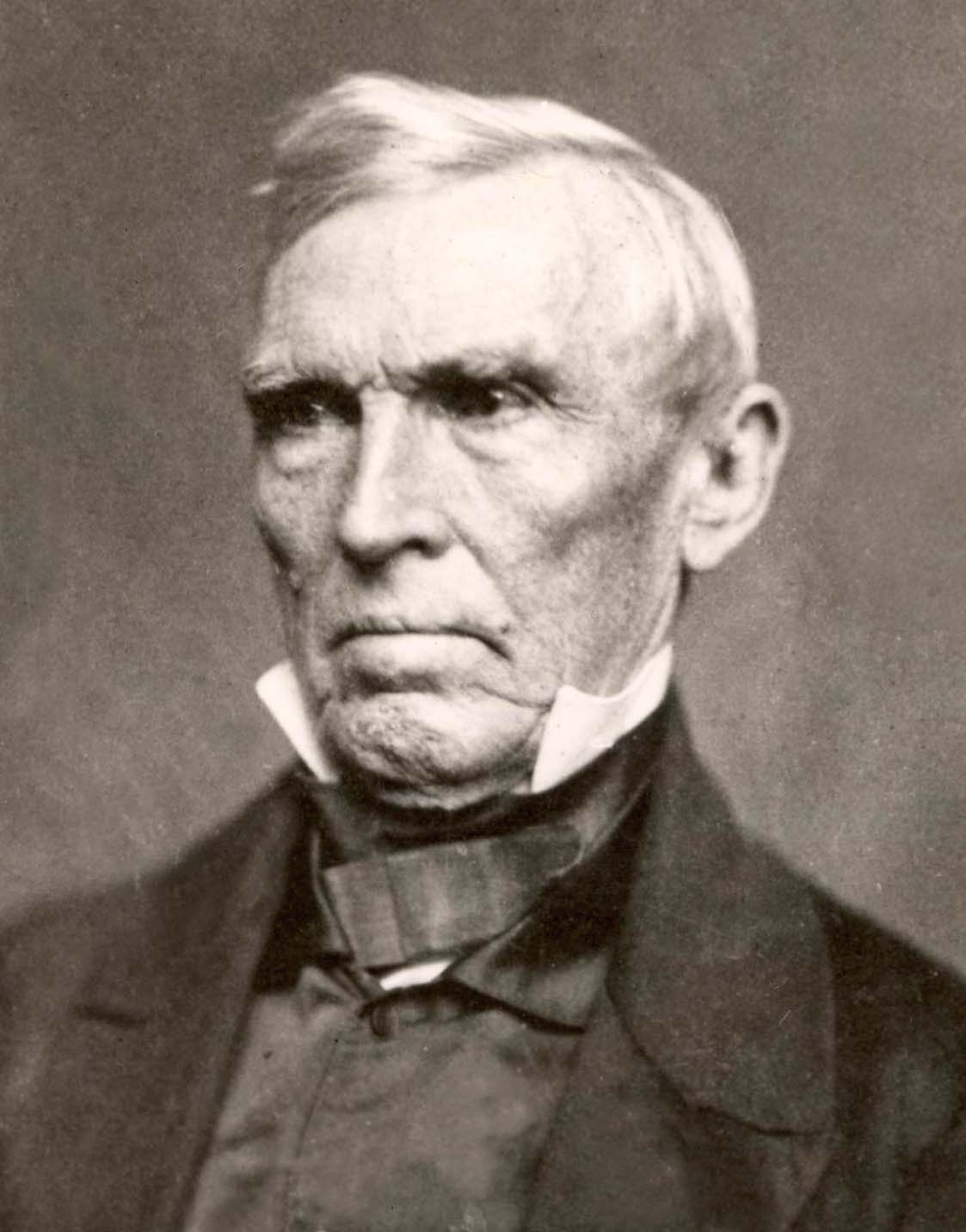
Good-natured U.S. General John Sedgwick (pictured) was walking with one of his adjutants along the battle line near Spotsylvania, Virginia, when a sharpshooter's bullet whizzed by. Men around him dived to the ground. The surprised general politely reprimanded them for dodging single bullets. A short time later, while another soldier walked by the general, another bullet whizzed by. The soldier dove to the ground, receiving another remonstrance from the general, who said, “Why, my man, I am ashamed of you, dodging that way. They couldn't hit an elephant at this distance." Just then, another bullet whizzed by, this time ending with “a dull heavy stroke,” according to the adjutant. When the adjutant turned to speak to the general, he noticed blood just below the general’s left eye. Then the general collapsed to the ground and died.

(Source: "Battles and Leaders of the Civil War," Castle Books)

Wednesday, September 8, 2010

#64 A House Divided

Senator John J. Crittenden (KY)

Maj. General George Crittenden, CSA


Maj. General Thomas Crittenden


The Civil War had an impact on the entire country, but it may have been a particular hell for John J. Crittenden, a seasoned U.S. senator from Kentucky. Not only had his efforts to preserve the Union through a series of compromises failed, but his sons, George and Thomas, ended up on opposite sides of the battle lines once they had been drawn. Both were veterans of the Mexican War, but George distanced himself from his heritage and fought for the South while Thomas grew closer to his father and fought to preserve the Union. What was more, the examples of the two warring brothers spread to the entire family. The two eldest sisters sided with the rebellion while the younger siblings supported the Union. Both men became major generals.

(Source: Eubank, Damon. In The Shadow of The Patriarch: The John J. Crittenden family in War and Peace. Macon: Mercer University Press. 2009)

Tuesday, September 7, 2010

#63

Photo courtesy of the Library of Congress


There is a story that on Thanksgiving Day, 1863, two children knocked on the door of the governor's mansion in Harrisburg, Pennsylvania. They explained that the death of their father, a Union soldier, left them penniless to wander the streets and beg for food. Moved by their plight, the governor, Andrew Curtin, established 15 schools for war orphans. Eventually that number grew to more than 40.

(Source: Marten, James, "Orphans from the Civil War, Cobblestone magazine, December 1, 1999.)